
Admissions
- Important Admission Notice
- F.E. Admission Schedule
- Fees Structure (F.E./D.S.E.)
- Documents List 2024-25
- Indemnity Bond for Return of SC
Connect with us
Enquire Now
Civil Engineering
Overview or About the branch
Civil Engineering is one of the oldest and most impactful engineering disciplines that shapes the infrastructure of our world. From designing smart cities and green buildings to constructing highways, bridges, dams, and sustainable water systems — Civil Engineers are at the core of national development.
At ViMEET, the B.Tech program in Civil Engineering offers a perfect blend of theoretical knowledge, practical skills, and innovation-driven learning. With a focus on structural engineering, geotechnical studies, environmental sustainability, transportation planning, and construction technology, the program is designed to meet the demands of modern infrastructure development. Students benefit from Project-Based Learning (PBL), industry visits, and hands-on lab experience to become future-ready professionals.
Intake Capacity

Career Opportunities
- Site Engineer / Project Engineer – Oversee construction projects on-site and ensure quality control.
- Structural Engineer – Design safe and efficient structures like buildings, bridges, and towers.
- Geotechnical Engineer – Analyze soil and rock behavior for foundation and underground constructions.
- Transportation Engineer – Plan and design highways, railways, and airport infrastructure.
- Environmental Engineer – Work on sustainable solutions for water treatment, waste management, and pollution control.
- Urban Planner – Design smart and sustainable urban spaces.
- Quantity Surveyor / Estimator – Handle budgeting, contracts, and cost management in construction.
- Construction Manager – Manage large-scale construction operations and workforce.
- Government Jobs – Appear for MPSC, UPSC, and other civil services or public sector opportunities.
Industries Hiring Civil Engineers
- Infrastructure & Construction – L&T, Afcons, Tata Projects, Shapoorji Pallonji
- Real Estate & Urban Planning – Godrej Properties, Hiranandani Group, DLF
- Transportation & Metro Projects – Indian Railways, Metro Corporations, NHAI
- Environmental & Water Management – GAIL, Suez, Municipal Corporations, NGOs
- Oil & Gas / Energy / Power – ONGC, GMR Group, Reliance
- Government & Public Sector Units (PSUs) – CPWD, PWD, MES, MMRDA, BMC, etc.
- Consulting & Design Firms – Aecom, Jacobs, L&T Infra, Atkins Global
Higher Studies & Research
- M.Tech / MS in Structural Engineering, Construction Management, Geotechnical Engineering
- M.Plan (Urban & Regional Planning), M.E. in Transportation or Environmental Engineering
- MBA in Infrastructure Management, Real Estate, or Project Management
- Ph.D. / Research Programs in Sustainable Infrastructure, Green Building Technology, or Smart Cities
From the Desk of the HoD
Greetings!
It gives me great pleasure to welcome you to the Department of Civil Engineering at Vishwaniketan’s Institute of Management, Entrepreneurship, and Engineering Technology (ViMEET). Civil Engineering is more than just a profession — it is a commitment to building the physical foundation of society. From roads, bridges, and dams to smart cities and sustainable infrastructure, civil engineers shape the way we live and grow as a nation.
At ViMEET, our department is committed to developing technically sound, ethically responsible, and socially aware civil engineers. With a curriculum aligned to global standards, hands-on Project-Based Learning (PBL), and industry-integrated experiences, we ensure that our students are equipped to meet the challenges of tomorrow’s infrastructure.
Our faculty comprises experienced academicians and industry professionals who guide students through real-world problem-solving, research, and innovation. We encourage students to participate in national-level competitions, fieldwork, and community-based projects that deepen both knowledge and civic responsibility.
We believe in nurturing not only skilled engineers but visionary leaders who contribute meaningfully to sustainable and inclusive development.
Warm regards,
Asst. Prof. Shilpa Deshpande
Head of Department
Civil Engineering, ViMEET
Department Vission
To be a center of excellence in Civil Engineering education, research, and innovation, empowering students to build sustainable, resilient, and intelligent infrastructure that improves the quality of life and supports global development.
Department Mission
- To impart strong foundational knowledge and practical skills in core and emerging areas of Civil Engineering through outcome-based education.
- To foster a culture of Project-Based Learning (PBL), research, and innovation that addresses real-world infrastructural and environmental challenges.
- To promote ethical, eco-conscious, and socially responsible engineering practices among students and faculty.
- To collaborate with industry, academia, and government bodies to ensure the relevance and application of knowledge.
- To prepare graduates for successful careers, higher education, entrepreneurship, and leadership roles in the built environment sector.
Program Educational Objectives (PEOs)
- Apply principles of Civil Engineering to plan, design, and manage sustainable infrastructure projects effectively and ethically.
- Embrace modern tools, technologies, and interdisciplinary knowledge to solve complex real-world engineering problems.
- Pursue higher studies, research, certifications, or entrepreneurial ventures to continuously enhance their knowledge and skills.
- Function effectively as team leaders or members with professional integrity, communication skills, and societal awareness.
Program Specific Objectives (PSOs)
- Apply the knowledge of engineering mechanics, materials, and structural systems to analyze and design safe and economical civil structures.
- Demonstrate skills in surveying, estimation, construction planning, project management, and use of relevant software (AutoCAD, STAAD Pro, etc.).
- Implement civil engineering solutions considering environmental impact, waste management, water resources, and sustainability practices.
Program Outcomes (POs)
- Engineering Knowledge – Apply knowledge of mathematics, science, and engineering fundamentals to solve civil engineering problems.
- Problem Analysis – Identify, formulate, and analyze complex engineering issues to reach logical conclusions.
- Design/Development of Solutions – Design infrastructure systems and processes that are safe, sustainable, and socially responsible.
- Conduct Investigations – Use research methodologies, data interpretation, and experiments to draw meaningful conclusions.
- Modern Tool Usage – Use modern civil engineering tools and software for analysis, design, and project execution.
- The Engineer and Society – Assess societal, health, safety, legal, and cultural aspects relevant to professional civil engineering practice.
- Environment and Sustainability – Understand the impact of engineering on the environment and commit to sustainable development.
- Ethics – Apply ethical principles and maintain professional responsibilities in engineering practice.
- Individual and Team Work – Function efficiently as an individual and in diverse teams, with leadership qualities.
- Communication – Communicate effectively through technical reports, documentation, presentations, and interactions.
- Project Management and Finance – Apply engineering and managerial principles in handling projects and financial constraints.
- Lifelong Learning – Recognize the need for and engage in continuous learning in the face of evolving technology.
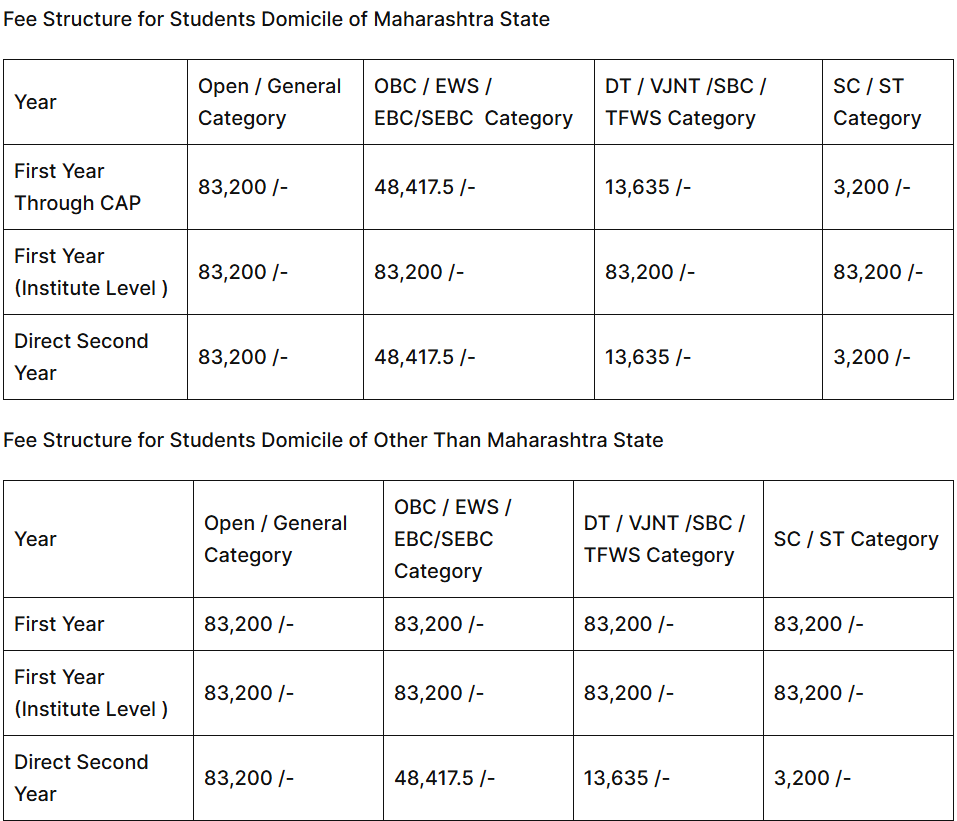
Fees Structure
Faculty & Staff
Department Achievements
Why Choose Us ??
At ViMEET, we don’t just educate future civil engineers — we empower them to become changemakers in infrastructure, sustainability, and innovation. Our modern laboratories, field training, and real-world exposure ensure that students are prepared for the dynamic needs of the construction and infrastructure sector from day one.
Our experienced faculty, robust curriculum, and strong focus on practical application allow students to tackle real-time challenges in structural design, water resources, environmental engineering, and smart cities. We maintain close ties with leading companies, government bodies, and research institutions to provide internships, guest lectures, site visits, and placement opportunities.
Whether you aspire to build skyscrapers, plan sustainable cities, or innovate in transportation and environmental systems, ViMEET’s Civil Engineering program provides the knowledge, mentorship, and platform to bring your vision to life.
Frequently Asked Questions (FAQs)
1. What subjects and skills will I learn in Civil Engineering?
You will study core subjects like Structural Engineering, Transportation Engineering, Geotechnical Engineering, Environmental Engineering, Fluid Mechanics, Surveying, and Construction Technology.
Alongside technical theory, you’ll also gain practical skills in design software (AutoCAD, STAAD Pro), project management, cost estimation, and sustainability practices.
2. Is coding required in Civil Engineering?
Coding is not a primary requirement, but basic programming knowledge (e.g., Python or MATLAB) can be helpful for automation, data analysis, and smart infrastructure projects. We introduce coding only where relevant, especially in simulation and modeling tools.
3. Can I shift to coding or software-related roles after Civil Engineering?
Yes. Civil Engineering builds strong problem-solving and logical thinking skills. With additional effort (like learning programming, software development, or data analytics), many graduates explore roles in tech companies, GIS, BIM (Building Information Modeling), or software for infrastructure solutions.
4. Is a strong background in Mathematics necessary?
Yes, a good grasp of mathematics is important — especially in subjects like structural analysis, fluid mechanics, and surveying. However, our teaching approach is concept-driven and supportive, ensuring students develop confidence in applying math practically.
5. What are the key soft skills developed during this course?
In addition to technical skills, you will enhance communication, leadership, teamwork, project management, and decision-making abilities — all crucial for on-site and office-based roles.ls.