
Admissions
- Important Admission Notice
- F.E. Admission Schedule
- Fees Structure (F.E./D.S.E.)
- Documents List 2024-25
- Indemnity Bond for Return of SC
Connect with us
Enquire Now
Mechanical Engineering
Overview or About the branch
The Mechanical Engineering Department at ViMEET is a dynamic center of innovation, application, and hands-on learning. The department blends strong theoretical foundations with practical exposure, empowering students to solve real-world problems in design, manufacturing, thermal systems, robotics, and sustainable technologies. Through Project-Based Learning (PBL), cutting-edge labs, industry linkages, and experienced faculty mentorship, students are prepared to meet the challenges of an evolving global industry. Our graduates go on to excel in core engineering, research, entrepreneurship, and interdisciplinary domains like automation, mechatronics, and green energy.
Intake Capacity

Career Opportunities
- Design Engineer – Conceptualize and create mechanical systems and products.
- Production/Manufacturing Engineer – Oversee and improve industrial processes and factory operations.
- Thermal/Power Plant Engineer – Work in energy production, HVAC, and heat transfer systems.
- Quality Assurance Engineer – Monitor, test, and ensure product/process quality standards.
- Automotive/Aerospace Engineer – Work in vehicle or aircraft design, simulation, and testing.
- Mechatronics/Automation Engineer – Integrate electronics with mechanical systems for smart solutions.
- Renewable Energy Consultant – Work on sustainable energy systems like wind, solar, or geothermal.
Industries Hiring Civil Engineers
- Core & Manufacturing – Tata Motors, Mahindra & Mahindra, Larsen & Toubro (L&T), Godrej, Thermax, Kirloskar, BHEL
- Automobile & Aerospace – Maruti Suzuki, General Motors, Ashok Leyland, Airbus, HAL
- Energy – NTPC, ONGC, Reliance, Siemens, GE Power
- Consulting & Services – TCS, Infosys, Accenture (for CAD/CAM/CAE & industry 4.0 roles)
- Public Sector Units (PSUs) – ISRO, DRDO, Indian Railways, SAIL, GAIL, BARC (through GATE)
Higher Studies & Research
- M.Tech / ME in: Thermal Engineering, Design Engineering, Manufacturing, Mechatronics, Robotics, CAD/CAM, Energy Engineering, Automobile Engineering
- MS / Ph.D. in: Aerospace, Renewable Energy, Artificial Intelligence in Mechanical Design, Nanotechnology, Advanced Materials
- MBA – in Operations, Industrial Management, or Supply Chain
- Certifications – SolidWorks, CATIA, ANSYS, Six Sigma, PMP, IoT & Automation Tools
From the Desk of the HoD
Greetings!
The Department of Mechanical Engineering at ViMEET is where curiosity meets craftsmanship, and theory transforms into real-world innovation.
Mechanical Engineering is more than the study of machines — it is the foundation of modern industry and sustainable progress. At ViMEET, we emphasize Project-Based Learning (PBL), where students are encouraged to apply concepts through hands-on projects, solve real-world challenges, and develop a mindset of innovation.
Our faculty comprises passionate educators and researchers dedicated to mentoring students in areas such as thermal engineering, robotics, design, manufacturing, and automation. Supported by advanced laboratories, industry tie-ups, and value-added programs, students graduate with not just knowledge — but competence, confidence, and creativity.
We aim to nurture professionals who are technically skilled, ethically grounded, and ready to lead in a rapidly evolving global landscape.
Warm regards,
Dr. Bhaveshkumar Pasi
Head of the Department
Mechanical Engineering, ViMEET
Department Vission
To establish the Department of Mechanical Engineering as a center of excellence in education, research, and innovation where students are nurtured to become industry-ready engineers and socially responsible leaders committed to shaping a sustainable future through impactful engineering solutions.
Department Mission
- To impart strong fundamentals and advanced technical knowledge through an industry-aligned, project-driven curriculum.
- To promote innovation, problem-solving, and research in areas like design, thermal systems, robotics, and advanced manufacturing.
- To foster ethical values, professional skills, and environmental responsibility among students.
- To build collaborations with industry, academia, and global institutions for enhanced learning and career growth.
- To nurture lifelong learners and entrepreneurs who contribute meaningfully to society and technology.
Program Educational Objectives (PEOs)
- Build strong foundations in engineering principles to succeed in industries, research, or postgraduate studies.
- Apply mechanical engineering knowledge to develop sustainable, safe, and cost-effective solutions that address societal and industrial problems.
- Pursue innovation, interdisciplinary collaboration, and entrepreneurial ventures with an understanding of evolving technologies.
- Demonstrate professionalism, ethical behavior, and commitment to lifelong learning in a dynamic global environment.
Program Specific Objectives (PSOs)
- Apply knowledge of thermodynamics, manufacturing processes, mechanics, and design principles to create efficient and reliable mechanical systems.
- Use modern software tools like CAD, CAM, and CAE (e.g., ANSYS, SolidWorks) to model, simulate, and optimize mechanical components and systems.
- Integrate principles from electronics, automation, and control systems to solve problems in areas such as robotics, automotive systems, and smart manufacturing.
Program Outcomes (POs)
- Engineering Knowledge – Apply knowledge of mathematics, science, and engineering fundamentals to solve complex mechanical engineering problems.
- Problem Analysis – Identify, formulate, and analyze engineering problems using first principles of mathematics, physical sciences, and mechanical engineering.
- Design/Development of Solutions – Design mechanical systems, components, or processes that meet specified needs with appropriate consideration for health, safety, environment, and societal impact.
- Conduct Investigations of Complex Problems – Use research-based knowledge and methods including experiment design, data analysis, and synthesis to draw valid conclusions.
- Modern Tool Usage – Select and apply modern engineering tools and software for modeling, simulation, and analysis of mechanical systems.
- The Engineer and Society – Apply contextual knowledge to assess societal, health, safety, legal, and cultural issues relevant to mechanical engineering practice.
- Environment and Sustainability – Understand the environmental impact of mechanical engineering solutions and demonstrate the need for sustainable development.
- Ethics – Apply ethical principles and commit to professional ethics and responsibilities in engineering practice.
- Individual and Team Work – Function effectively as an individual and as a team member or leader in diverse and multidisciplinary settings.
- Communication – Communicate effectively on complex engineering activities through reports, presentations, and clear instructions.
- Project Management and Finance – Demonstrate knowledge of engineering and management principles to lead and manage projects in multidisciplinary environments.
- Lifelong Learning – Recognize the need for lifelong learning and possess the ability to engage in independent and continuous learning in the context of technological advancement.
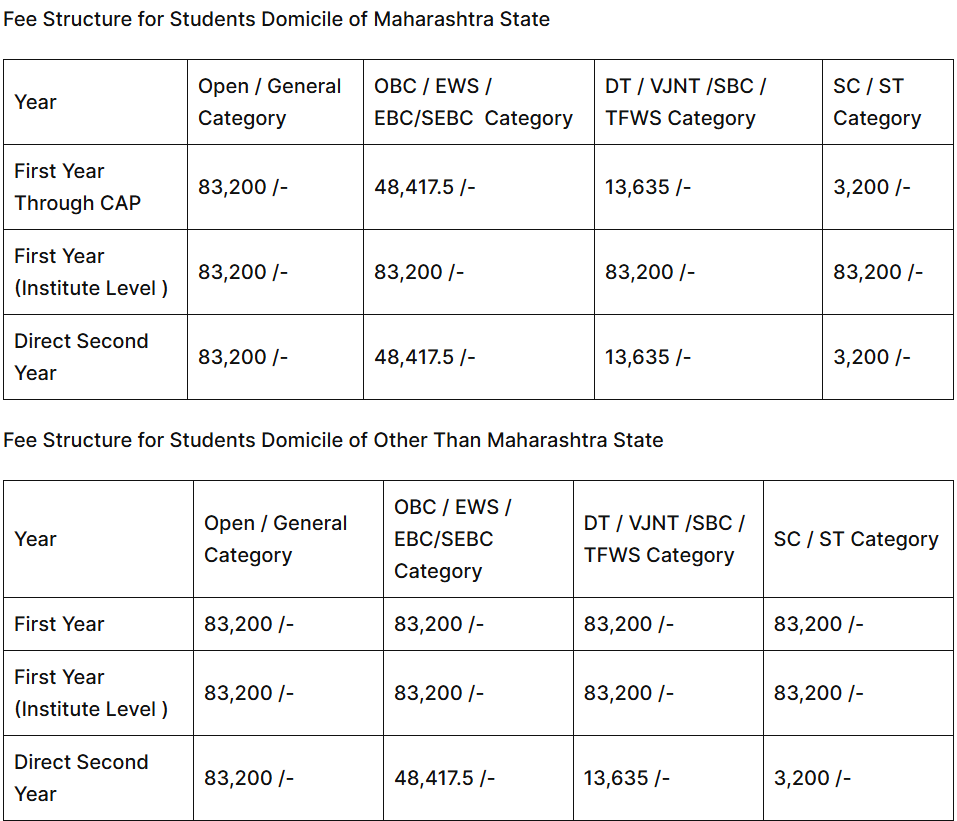
Fees Structure
Faculty & Staff
Department Achievements
Department Events
Value Addition Program (Tech PBL)
The Value Addition Program (Tech PBL) was designed to introduce students to the practical applications of engineering concepts through a step-by-step, immersive learning experience.
- Day 1–2: Students received foundational training in basic engineering practices, tools, and methodologies relevant to real-world scenarios.
- Day 3–4: Students participated in field-level exposure, where they interacted with industry-grade equipment and applied theoretical knowledge in practical setups.
- Day 5–6: Students were divided into teams and assigned mini-projects by industry trainers and faculty. These projects challenged students to solve real-world problems using innovative approaches and technical skills.
The event not only enhanced technical proficiency and problem-solving abilities, but also fostered teamwork, creativity, and a deeper understanding of core mechanical concepts.
ANSYS
Students got trained on how to use the ANSYS Workbench GUI, how to interface with CAD geometry, how to mesh the geometry, how to apply loads and boundary conditions, how to solve the analysis, and how to post-process the results.
Students understood the basics of finite element theory and gained insight on how to create and analyze models.
Automobile
To complement theoretical learning with hands-on experience, the Mechanical Department at ViMEET organized a Value Addition Program (VAP) on engine components. Students explored real engine parts and assemblies, gaining practical insights into their structure, function, and interconnections — bridging the gap between classroom knowledge and real-world automotive systems.
Bridge Health Monitoring System
Mechanical Engineering students showcased an innovative Bridge Health Monitoring System that uses sensors and real-time data to track structural safety parameters like vibration and stress. Presented to industrial experts, this project highlighted students’ ability to combine mechanical design with IoT and data analytics, addressing real-world infrastructure challenges through Project-Based Learning (PBL).
Why Choose Us ??
At ViMEET, the Department of Mechanical Engineering stands as a center of excellence in technical education, innovation, and industry readiness. Our curriculum is designed in alignment with emerging trends in smart manufacturing, green technologies, robotics, and Industry 4.0.
What sets us apart is our strong focus on Project-Based Learning (PBL) — ensuring that students apply concepts to real-world problems from the very first year. With state-of-the-art labs, hands-on workshops, live industrial projects, and expert mentorship, our students graduate with both deep technical knowledge and practical experience.
We foster innovation and research through national-level competitions, design challenges, and startup incubation support. Our students are not only industry-ready but are also encouraged to become future creators, leaders, and entrepreneurs in the ever-evolving mechanical domain.
By choosing Mechanical Engineering at ViMEET, you step into a world of endless possibilities, where creativity meets engineering excellence.
Frequently Asked Questions (FAQs)
1. I don’t know anything about machines or mechanics. Is Mechanical Engineering still right for me?
Yes! You don’t need to know anything beforehand. The course starts from the basics and gradually builds your knowledge. What matters is your interest in understanding how things work, designing systems, or being curious about real-world machines like bikes, engines, fans, or robots.
2. Do I have to be good at drawing or sketching?
You’ll learn engineering drawing and 3D design using software (like AutoCAD or SolidWorks) — no prior drawing skills are needed. Everything will be taught step-by-step.
3. What if I later want to go into software or coding?
You can! Many mechanical engineers switch to tech roles with some extra learning. Some common paths include Data Analytics / Python , CAD Programming / Simulation Software, Simulation Tools (Ansys, MATLAB) , Software for industrial automation , Business Analyst or Tech Consultant roles , Tech-enabled Product Design.
4. Is Mechanical Engineering outdated due to AI or IT boom?
Not at all. Mechanical is the foundation of all machines, and with Industry 4.0, EVs, green energy, drones, and robotics, the demand is growing, especially for mechanical engineers who understand tech.
5. What subjects are covered in Mechanical Engineering?
The curriculum includes:
Industrial Engineering & Operations Research
Engineering Mechanics
Thermodynamics & Heat Transfer
Machine Design
Manufacturing Technology
Fluid Mechanics
Robotics & Automation
Computer-Aided Design (CAD)
Renewable Energy Systems